
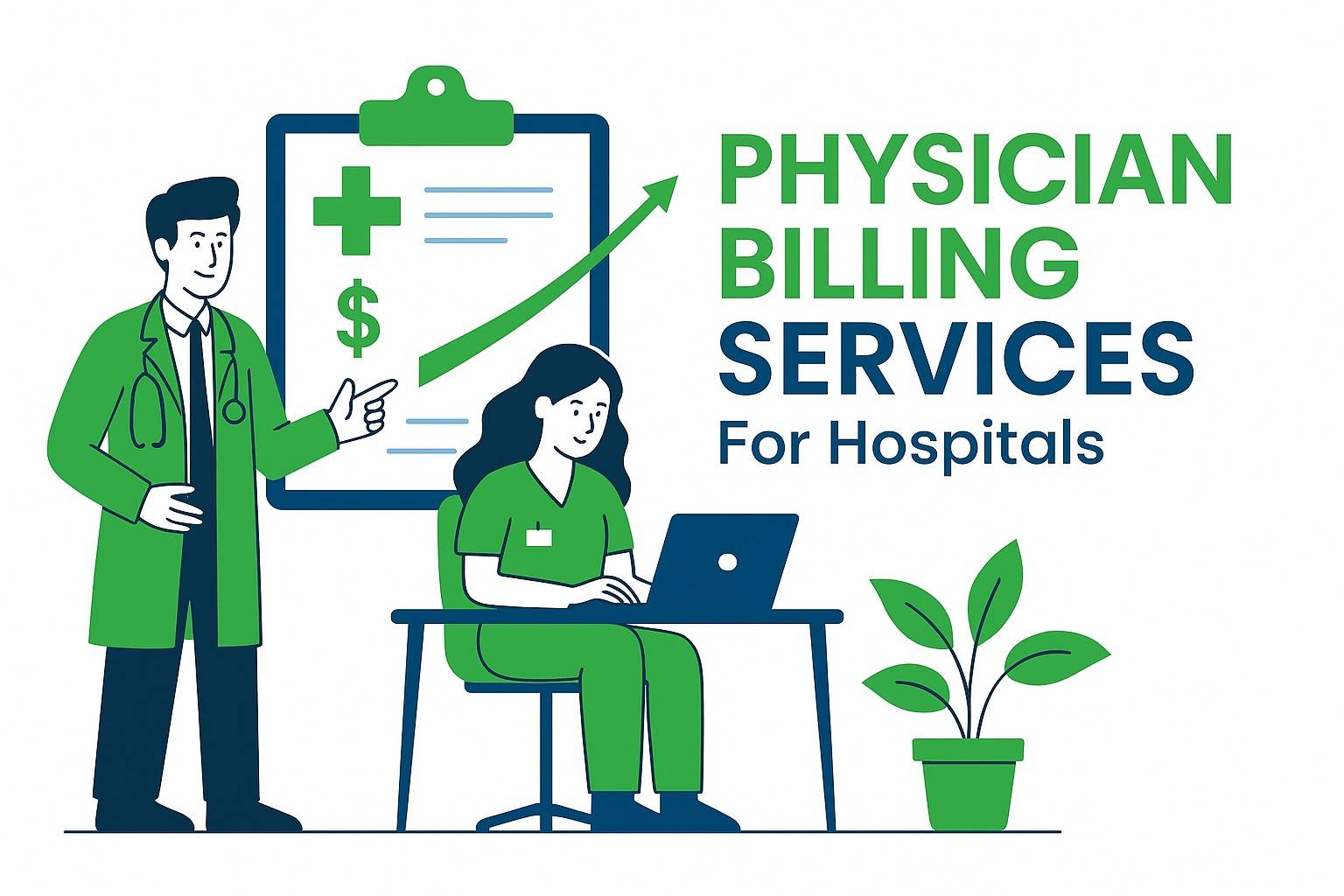

Physician Billing Services For Hospitals: Enhancing Revenue Cycle Management and Financial Efficiency
In today’s complex healthcare environment, hospitals face numerous challenges in managing their financial operations, particularly when it comes to physician billing. Physician Billing Services for Hospitals play a crucial role in streamlining revenue cycle management (RCM), ensuring accurate claim submissions, reducing denials, and maximizing reimbursements. This article explores the importance, processes, and benefits of physician billing services tailored specifically for hospitals.
What Are Physician Billing Services for Hospitals?
Physician Billing Services for Hospitals refer to specialized medical billing processes that focus on managing claims and payments for professional services rendered by physicians and healthcare providers within hospital settings. Unlike institutional billing, which covers facility fees such as room charges, equipment use, and nursing services, physician billing pertains to the billing of professional services such as consultations, examinations, surgeries, and diagnostic interpretations performed by physicians.
Hospitals often handle these billing functions separately because physician services are reimbursed differently from hospital facility fees, requiring unique coding, submission, and follow-up procedures.
Key Components of Physician Billing Services in Hospitals
1. Accurate Medical Coding and Documentation
Physician billing services begin with precise medical coding. Certified coders translate clinical documentation into universally accepted codes like CPT (Current Procedural Terminology), ICD-10 (International Classification of Diseases), and HCPCS (Healthcare Common Procedure Coding System). Proper coding ensures compliance with payer requirements and reduces the risk of claim denials.
2. Claim Submission and Processing
Once coding is complete, claims are submitted electronically through standardized formats such as the CMS-1500 form or 837-P electronic claims. The billing service ensures all claims contain accurate patient information, physician details, and service codes, facilitating prompt claim processing by insurance companies.
3. Eligibility Verification and Patient Responsibility
Before services are rendered, billing services verify patient insurance eligibility and coverage details to avoid surprises post-treatment. This step also determines copays, deductibles, and coinsurance amounts that patients may owe, improving financial transparency.
4. Denial Management and Appeals
Denied or rejected claims can significantly impact hospital revenue. Physician billing services manage denials by identifying reasons, correcting errors, and resubmitting claims or appealing decisions, ensuring maximum reimbursement.
5. Payment Posting and Financial Reporting
Accurate payment posting keeps hospital financial records up to date. Billing services provide detailed reports on collections, outstanding accounts receivable, and financial performance, helping hospital management make informed decisions.

Why Hospitals Should Use Physician Billing Services
Enhanced Revenue Cycle Management
Physician billing services optimize the entire revenue cycle, reducing the time between service delivery and payment. By ensuring claims are clean and compliant, hospitals can minimize delays and denials, thereby improving cash flow.
Compliance with Regulatory Standards
Hospitals must adhere to complex regulations including HIPAA, CMS guidelines, and recent laws addressing surprise billing. Professional physician billing services ensure compliance, reducing the risk of audits, fines, and penalties.
Reduced Administrative Burden
Managing physician billing internally requires specialized staff and resources. Outsourcing these services allows hospitals to reduce overhead costs, minimize staffing challenges, and focus more on patient care.
Improved Patient Satisfaction
Transparent billing practices, accurate statements, and effective communication reduce patient confusion and disputes related to billing, enhancing overall patient experience.
Challenges in Hospital Physician Billing and How Services Help
Hospital physician billing involves unique challenges, such as coordinating billing between multiple providers, managing complex coding scenarios, and handling payer-specific requirements. Professional billing services address these issues by:
-
Utilizing advanced technology for data integration between hospital and physician systems
-
Providing dedicated teams familiar with hospital workflows and specialty-specific billing
-
Implementing rigorous quality checks and audits to ensure accuracy
The Role of Technology in Physician Billing for Hospitals
Modern physician billing services leverage technology such as Electronic Health Records (EHR) integration, automated claim submission platforms, and analytics tools. These technologies facilitate faster processing, real-time tracking of claim status, and predictive analytics to prevent denials before they occur.
Conclusion
Physician Billing Services for Hospitals are indispensable for ensuring efficient revenue cycle management, compliance, and financial stability. By partnering with expert billing providers, hospitals can streamline their billing processes, reduce errors, and enhance patient satisfaction. As healthcare regulations evolve, professional physician billing services will continue to be a strategic asset for hospitals seeking to optimize their financial performance and focus on delivering quality patient care.

1 thought on “Physician Billing Services For Hospitals – Streamlined & Accurate”
Pingback: Physician Services Billing – Accurate & Efficient Medical Billing